
Why i’m writing this
People often only share the positive moments in their lives publicly. And I think that gives an incomplete picture of a person and results in a lot of the negative effects we see from social media.
I’d therefore like to share an authentic account of a medical experience I’m currently living through. I share it too because someone also shared a pic on LinkedIn a couple of years ago that inspired me to reach out to them in a DM to ask if they had the same diagnosis as I do, which it turns out they did. I’ve learned so much from an ongoing series of DMs in which he shared his decisions and experiences.
I’d therefore like to pay it forward to others who may have something similar as well as to share it with those of you with whom I work to let you know about this aspect of my life over the next while and explain any absences to meetings that may be required.
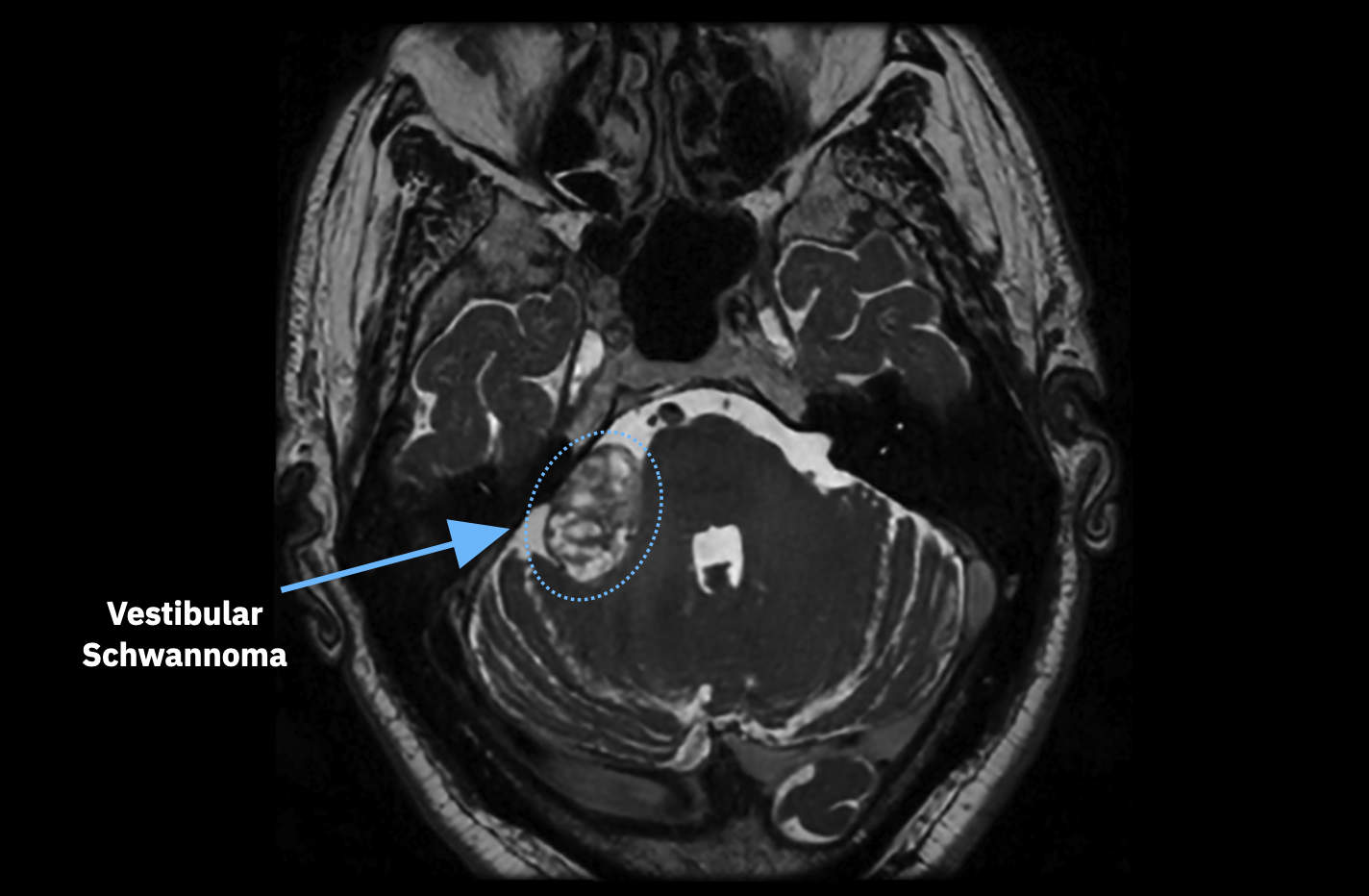
The MRI slice of my skull showing the tumor indicated by the blue dotted line surrounding it.
Learning that something wasn’t right
A few years ago, my right ear felt full which I attributed to the pressure not equalizing after a flight I’d been on. I used to fly a lot so it was quite a reasonable attribution. However, when things didn’t clear up I got a referral to an ENT and he said that I’d need to get an MRI because single-sided hearing loss is often associated with a tumor.
I had the MRI and, yup, I was diagnosed with a benign tumor that has two names Vestibular Schwannoma and Acoustic Neuroma. The current most accurate medical term is Vestibular Schwannoma. Both terms provide some indication of the two most common symptoms—loss of balance and loss of hearing—caused by the tumor pressing on the vestibular and auditory nerve, respectively. There is no known cause, just a random genetic glitch in the vestibular nerve’s Schwann cells.
Now that I reflect on it, I recall being on that super long escalator at London’s Heathrow Airport Terminal 2 some year ago and getting really nervous with some serious vertigo which I’d never experienced before.
I’ve also been somewhat unsteady on my feet particularly when walking at night, when visual cues are reduced and your brain relies more heavily on the vestibular system, which in my case has been compromised. My hearing on my right side has also been getting progressively worse (by about 80%) and I’ve been experiencing tinnitus (buzzing and ringing in the ears).
Wait and see approach
The primary initial treatment advice was no treatment at all, just observing the tumor with yearly MRIs. For many people, wait and see is the only approach they’ll ever have. Up until this year, the tumor was stable at about 24mm at its largest. However, the MRI from earlier this year indicated that the tumor had grown 7mm, and importantly, beyond the 3cm that requires medical intervention.
If I don’t pursue the medical intervention now, the tumor would keep growing, worsening hearing and balance and eventually pressing hard enough on the brainstem and cerebellum to block spinal-fluid flow, affect facial nerves, and ultimately become life-threatening, an outcome nobody wants.
Treatment options
Also, a year ago, I requested a consult with a brain surgeon to discuss what might happen if the tumor were to grow. He mentioned that my type of tumor, which has what are called cystic (fluid-filled) components, would result in my needing to have brain surgery.
This year I went back to him now that the need for actual medical intervention was required and he repeated the same advice but did mention that I should see an expert in radiation treatment, though he cautioned, as he did the previous year, that radiation would likely not be an option. I was then referred to a radiation oncologist, not that my tumor was now cancerous but because that’s the medical specialty that deals with radiation treatment which is mostly used to treat cancers.
The radiation oncologist pointed out that a full single dose of what’s referred to as Gamma Knife Surgery wouldn’t be appropriate for my size and type of tumor but that Hypofractionated Stereotactic Radiation treatment would be. Rather than a single large dose, this approach uses five smaller doses given every other day for two weeks (excepting weekends). He also mentioned that some recent research actually indicates that tumors with cystic components do better than solid tumors using this treatment method.
As I’ve mentioned previously here, I also have an AI digital twin with all my medical information ingested so I’ve also being using it with the highest level Claude model to look for the latest research and to provide me day-to-day advice. It’s been amazing. In fact, my doctors regularly mention that I know more about certain things than they do when I check with them regarding what I’ve found. Of course, I also read the articles in the medical literature myself thoroughly that the AI directs me to. And some recent research does in fact suggest that cystic component tumors like mine respond better and more quickly to the treatment protocol.
Treatment decision
My surgeons and radiation oncologist left the decision of whether to go with surgery or radiation entirely up to me. The factor that convinced me to go with the radiation option was the difference in the two procedures when it comes to protecting the facial cranial nerve. Surgery has a 10-15% likelihood of permanent damage leading to facial palsy whereas the particular radiation protocol prescribed for me has only a 1-2% likelihood of facial nerve damage and even then it is typically not permanent.
When I shared my decision with my lead surgeon to go with radiation he said that he couldn’t agree more with my decision. The literature suggests a success rate of 90—95% to arrest tumor growth. And if the radiation doesn’t work, he mentioned that I’ll always still have surgery as an option. I told him that while I’ve loved working with him, that I truly hope to not see him again (because that would mean the radiation failed).
Some cool technology
The other new development is the treatment machine itself. The hospital and center I’m going to, Sunnybrook Hospital Odette Cancer Centre in Toronto, collaborated with six other centers globally and with the manufacturer, Elekta, to combine in one integrated machine an MRI machine for super precise real-time guidance of the radiation together with a linear accelerator that delivers the radiation, referred to as an MR-LINAC machine.
I’ve been fitted with a custom-made mesh mask to secure my head to the table in the MR-LINAC machine plus I’ve had a CT scan and an MRI to provide the medical and physics team the images to use in the planning of my treatment protocol.
The equipment like this at the Odette center as well as the staff are absolutely awesome so I’m getting the very best of care and I so appreciate that.
[Please see the updates section below for the actual machine that my radiation oncologist meant.]
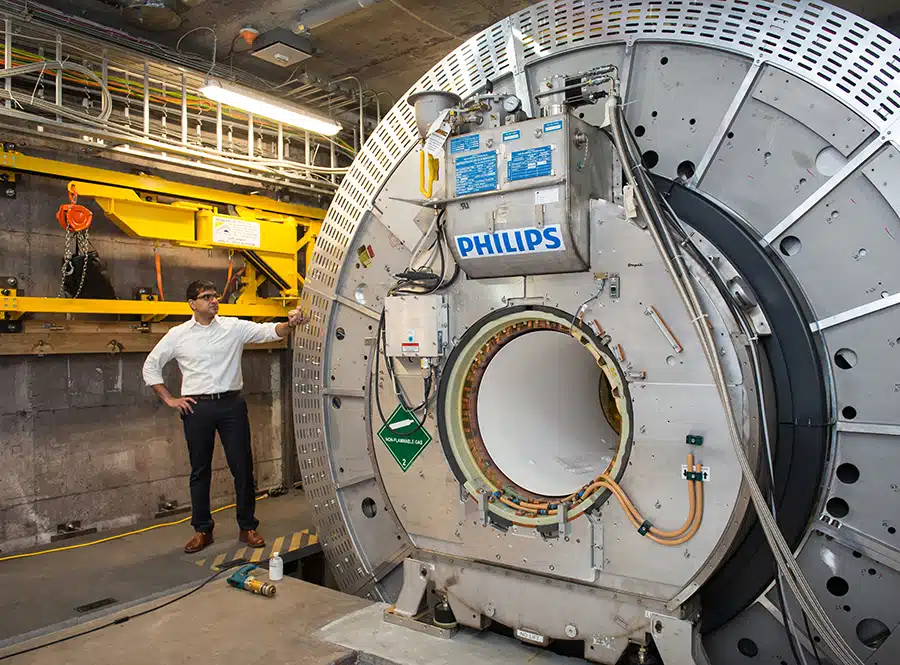
The technical guts of the Elekta MR-LINAC machine
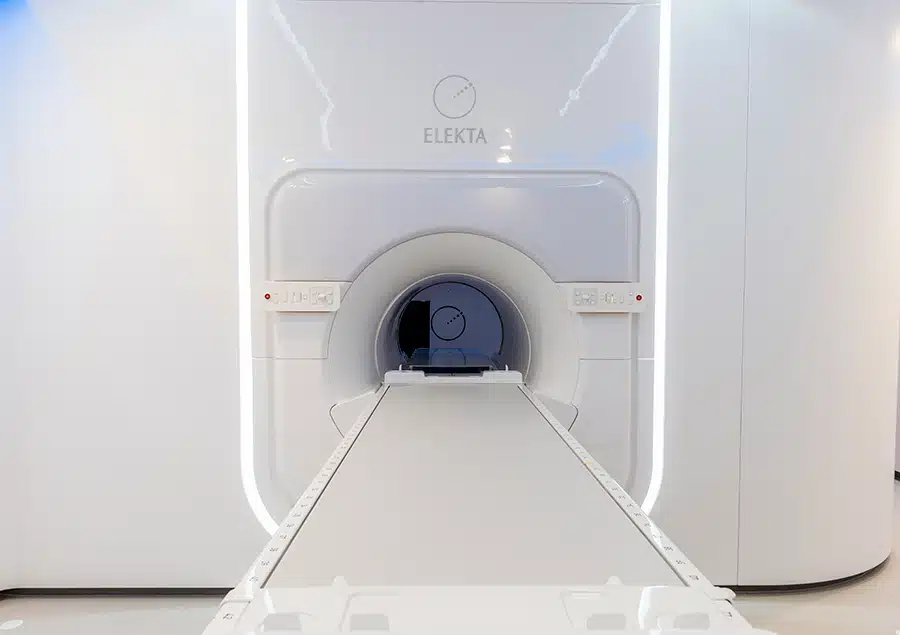
The patient view of the Elekta MR-LINAC Machine.
expected recovery
Based on everything I’ve read in the literature and been told by my medical team, I’ll likely experience fatigue and possibly other minor symptoms that build up over the two weeks of treatments and then symptoms like balance, hearing, and possibly some periodic and temporary facial weakness may increase over the following weeks and months. This is due to the fact that the radiation damages the tumor's cells, and the body's inflammatory response to that damage like swelling and extra fluid temporarily may swell up before it quiets down and contracts.
The success or failure of the procedure at halting and ideally slightly reducing the size of the tumor will only be known a year or even a year and a half after the treatments. Those assessments are done with a 6 month, year, and then yearly MRIs. So, this is a long process and the initially dreaded MRI machine has now become my best friend.
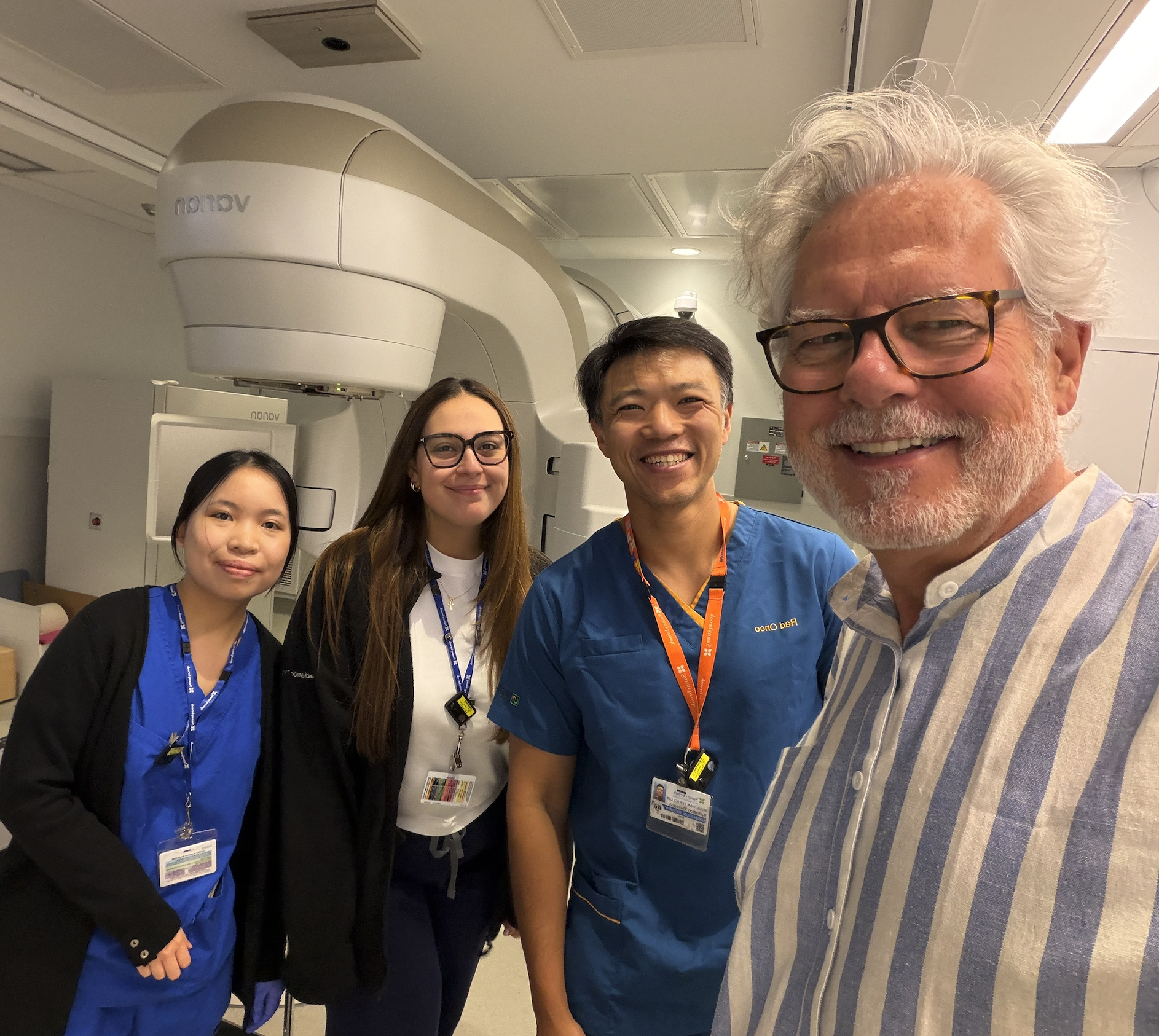
My Odette Cancer Center Radiology Team
Before I get into the life updates of my experiences with the treatments, I’d just like to take a moment to acknowledge and thank my medical team.
First, the CEO of my health and the conductor of my overall health journey is Dr. Kristen Reipas, my family physician. She is beyond a doubt the very best family doc I’ve ever had over my 71 years. She’s of course knowledgeable but also curious, empathic, and collaborative. We work together as a team regarding diagnoses, tests, and treatments as well as just discussions of research and underlying disease mechanisms. She’s been practicing for about six years and I learned recently that she also holds a PhD in addition to her MD and Family Medicine speciality. That explains her curiosity and depth of exploration, and natural inclination to collaborate. She’s moving to another clinic in another city at the end of this month but I told her that I’m going with her to her new clinic. A patient-doctor relationship like we have is hard to replicate with someone else.
The Ear, Nose, and Throat specialist I was referred to by Dr. Reipas was Dr. Thileep Kandasamy, He told me that one-sided deafness was potentially an indication of a possible tumor so he sent me for an MRI and also the yearly MRIs after that. The MRI that discovered the 7mm growth then led me to refer me to the lead brain surgeon for my type of condition at Sunnybrook Hospital.
Dr. Trung Le is another MD+PhD and it showed. He was a delight to work with and enthusiastically explored the recent literature I had found. He also referred me to Dr. Jay Detsky, a radiation oncologist who was also so open to discuss all aspects of the treatment.
Dr. Earl Teitelbaum, my cardiologist who Dr. Reipas referred me to when I was thinking that an eight-hour brain surgery was my only option and I wanted to check to ensure my heart and cardiovascular system was up to that kind of challenge. It turns that it is.
Last and certainly not least, my radiology team, shown in this picture who have supported me through my treatments.
I am indebted to these amazing professionals for having taken me to where I am now.
I’ll provide live updates here
Wednesday, July 29, 2026
I start my treatments next week on Tuesday and Thursday and then resume them the following week on Monday, Wednesday, and Friday.
Tuesday, August 4, 2026 - first treatment day
Wow, that was a breeze! Seriously! I was in and out of the treatment room in 10 minutes and the radiation beam was only on for 1 minute. The two staff members were amazing. It turns out that when my radiation oncologist said that I’d be getting the treatment on the latest LINAC machine, I assumed that it was the MR-LINAC that I mentioned above. That machine is optimized for tumors that move around in the body whereas the one I was in, the Varian trueBEAM, is optimized for my kind of tumor. It’s also a machine with pretty cool technology in it.
The Varian trueBEAM is a linear accelerator. It generates a precise, high-energy X-ray beam and shapes it to the exact contours of my tumour. Using a technique called RapidArc, the machine sweeps in a single arc around my head, and as it rotates, 120 tiny computer-controlled "leaves" continuously reshape the beam to match my tumour from every angle, concentrating the dose on the target and steering it away from the healthy nerves, cochlea, and brainstem right beside it. That's why the beam was only on for about a minute.
Before it starts, the machine takes a quick 3D image to confirm the tumour is exactly where the plan expects, down to the millimetre and then checks its own accuracy hundreds of times a second while I lie still in the custom mesh mask pictured here.
The MR-LINAC I'd assumed I'd be on is built to chase tumours that move, like in the lung or abdomen, which makes each session much longer. Mine sits fixed against the skull base, so it doesn't need that. The trueBEAM is optimized for exactly my situation with excellent well-established outcomes, and thankfully, in a fraction of the time in the room.
The machine I’m being treated on also adds genuinely current technology, most notably an advanced imaging system (HyperSight) that gives the team an exceptionally sharp 3D picture, so they can target the tumour tightly while better sparing the healthy nerves, cochlea, and brainstem right beside it. So my radiation oncologist was right on every count: the newest machine on their floor, the best-equipped current version, and exactly the right tool for my tumour.
Now I just need to rest up and hope not to have too serious side effects. I was told to expect a headache but if it gets severe or if I have serious balance issues or blurred vision, I should call them. So far so good. Just a bit of wooziness in my head but it’ll be great if that’s all I feel. I’ll update here again on Thursday when my next treatment takes place.
I told my son who drove me just before I went in that this will either be fine and I’ll feel fine about the other four treatments, or it’ll be horrendous and I’ll dread each of the remaining four treatments. I’m delighted that it was the former and to be honest, I rather enjoyed it.
Here are a couple of pics of the machine and the mask.
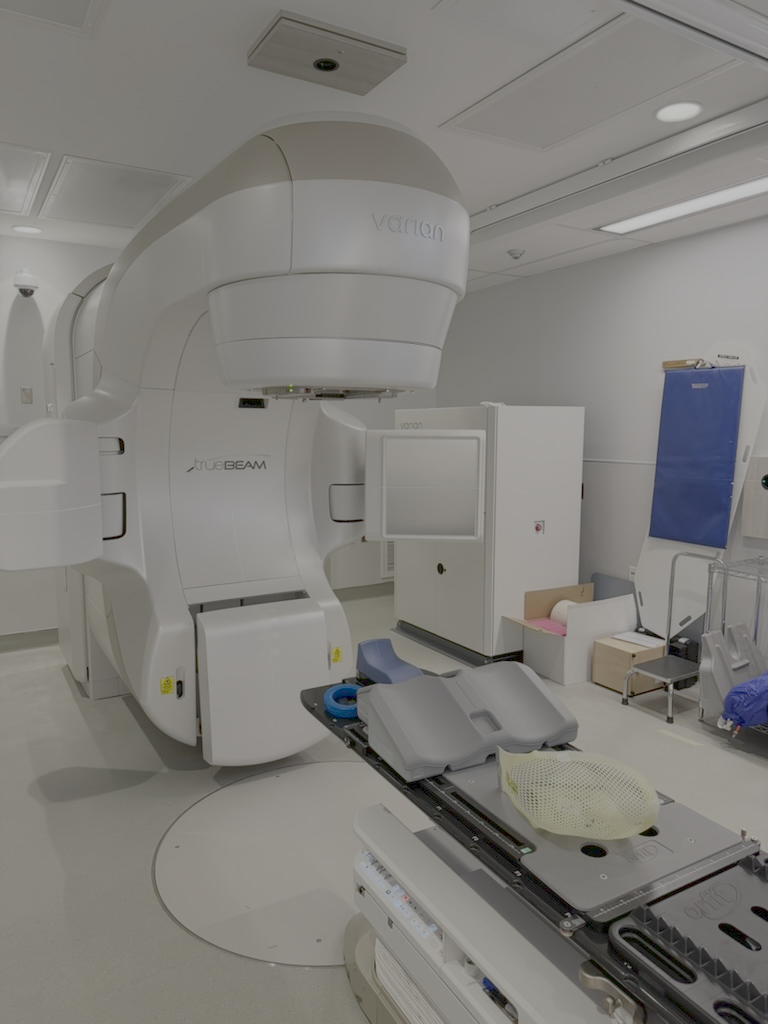
The Varian trueBEAM linear accelerator that delivered my treatment. I lay on the couch in the foreground; the machine rotated around my head to deliver the beam.
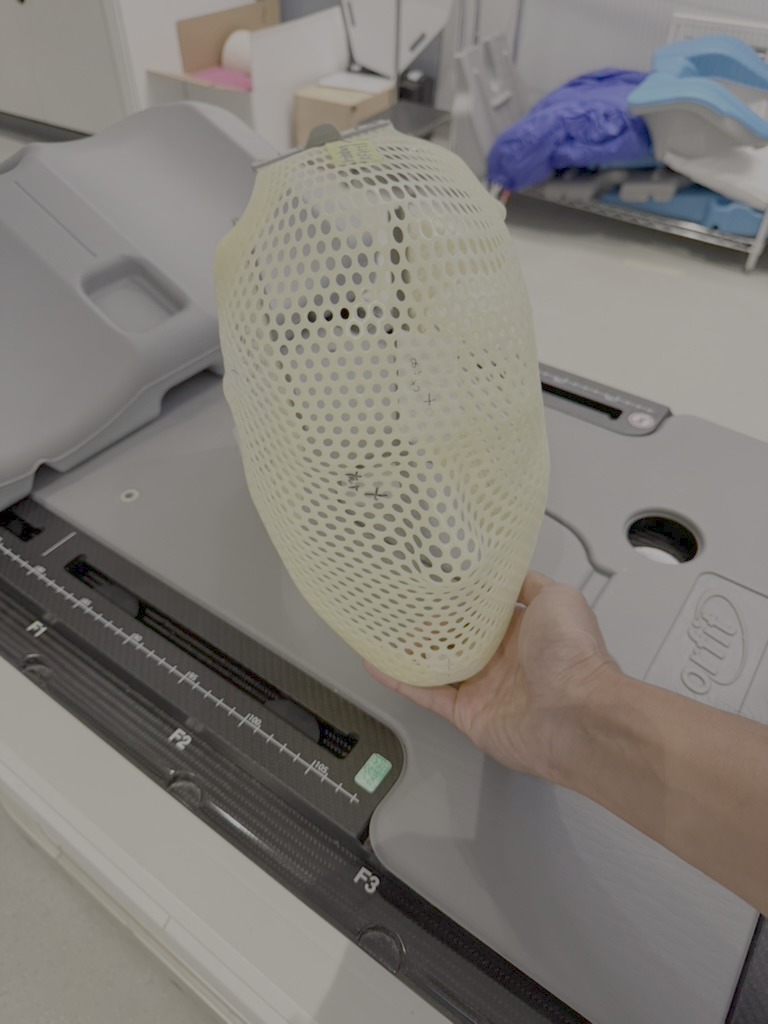
My custom mesh mask, moulded to my face, with the alignment marks the team uses to position me identically every session. It clips to the table to hold my head perfectly still.
Thursday, August 6 — Second Treatment Day
Yesterday’s recovery day went reasonably well except that I had pretty significant fatigue and a slight headache. This morning I felt entirely fine again and ready for the second treatment.
I told the staff that I was really looking forward to today’s session and that I also would appreciate it if they would take a pic of me on the table with the mask on. They gladly did it, in fact several.
After the session, I also talked more about the machine with the staff and they mentioned that they were really proud of it and that it was absolutely the newest piece of equipment in the entire facility which confirmed that this is the machine my radiology oncologist was referring to when he said that I’d be on the very latest and best that they had.
Here’s the pic.
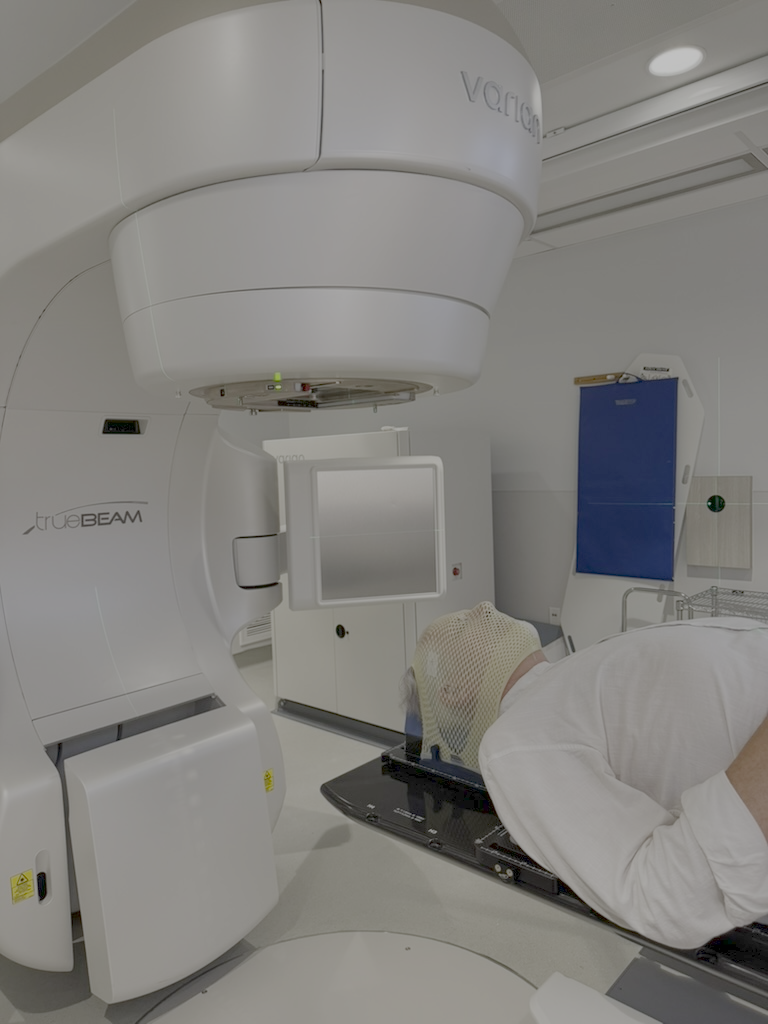
A pic of me with the mask over my head and bolted to the table about to go into the trueBEAM machine. The hardest thing about the treatment is getting off that very narrow table that’s also quite high off the ground. The staff helped me down.
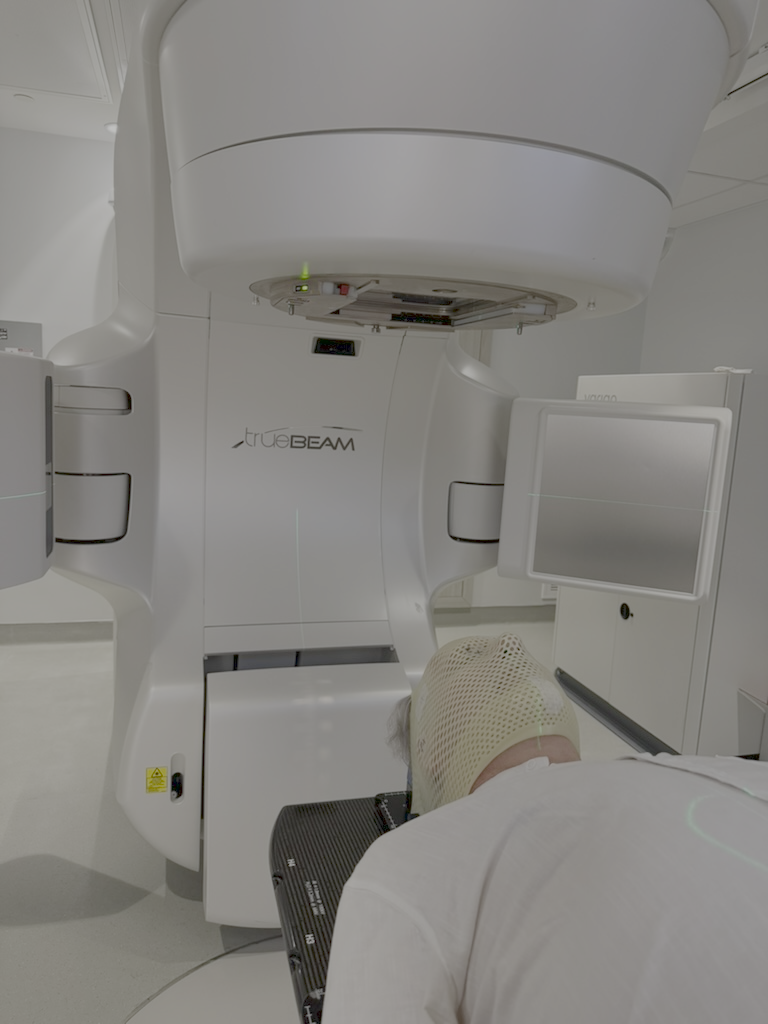
While it looks scary and claustrophobic, it really isn’t from inside the mask. It also makes you aware of the need to not even move your head a tiny bit inside the mask because the beam wouldn’t hit the tumor correctly and possibly healthy tissue instead.
Saturday, August 8, 2026 - Recovery Weekend
I’d just like to capture for anyone who may be going through this in the future that there’s now a consistent pattern that I’ve discerned with me feeling fine for a few hours after a treatment, then feeling really fatigued with a wooziness in my head for about 24 yours, and after that feeling a lot better again. That’s clearly why the designed the treatment protocol to be every other day. I’ve now blocked my calendar and delegated meetings for those hard recovery periods.
Given that they don’t do treatments on the weekend, I now have a three day recovery period which I really welcome. Our local family gets together every Sunday afternoon and evening plus have a Zoom FamJam call with the away family that evening. I’m glad that I’ll be feeling good for that. And then I’ll be having my last three treatments on Monday, Wednesday, and Friday.
I should also share that I had two conversations with people who also had a Vestibular Schwannoma both about 15 years ago who’s partners saw my post and reached out to arrange a call. I was so grateful for that. I learned that I was pretty fortunate to have my tumor smaller than theirs when they had to have theirs treated. Given that it was also so long ago, they weren’t offered radiation treatment but instead had the surgery immediately. Both had a pretty hard time with the surgery recovery but it was amazing to hear that both are doing really well now.
Monday, August 10, 2026 - Third Treatment Day
Three down and two to go! This treatment session was much like all the others, routine, but enjoyable. What made it enjoyable was that I engaged the medical radiation technologists to discuss several aspects of the treatment. That took us to the control panel for the trueBEAM which illustrates in detail the plan for how the machine goes about sending radiation into my brain and tumor. I found it fascinating and of course, I asked if I could take a picture of it. They said it’s you name and your information so sure!
Have a look at the pic of the control screen showing the actual radiation plan mapped onto my own brain. As I learned from my Claude Medical Advisor, those glowing concentric rings are called “isodose lines” and each color marks how much radiation reaches that part of the brain. The broad purple wash is a low, harmless dose spread widely while the hot red core at the center is the full dose landing precisely on my tumor, on the right side at the base of my skull.
Think of a kid on a sunny day using a magnifying glass to start a fire. Any single ray of sunlight passing through the glass is weak and harmless. But aim the glass just right, so all the rays converge on one tiny spot, and that spot gets hot enough to ignite. The radiation machine does exactly that, instead of one strong beam that would burn everything in its path, it sends many weak beams sweeping around my head from different angles. Each one passes harmlessly through healthy tissue but they’re all aimed to meet at the same point, my tumor, where they add up to a dose powerful enough to do the job. Everywhere else gets a little; the target gets it all.
Seeing it rendered in color like this, painted right onto a scan of my own head, is the most vivid proof I’ve had of just how precise, and how gentle on everything around it, this technology really is.
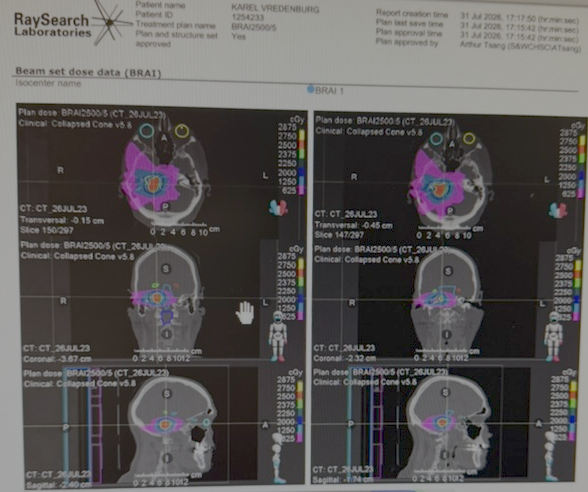
The control panel of the trueBEAM machine I’m treated on illustrating the my treatment plan.
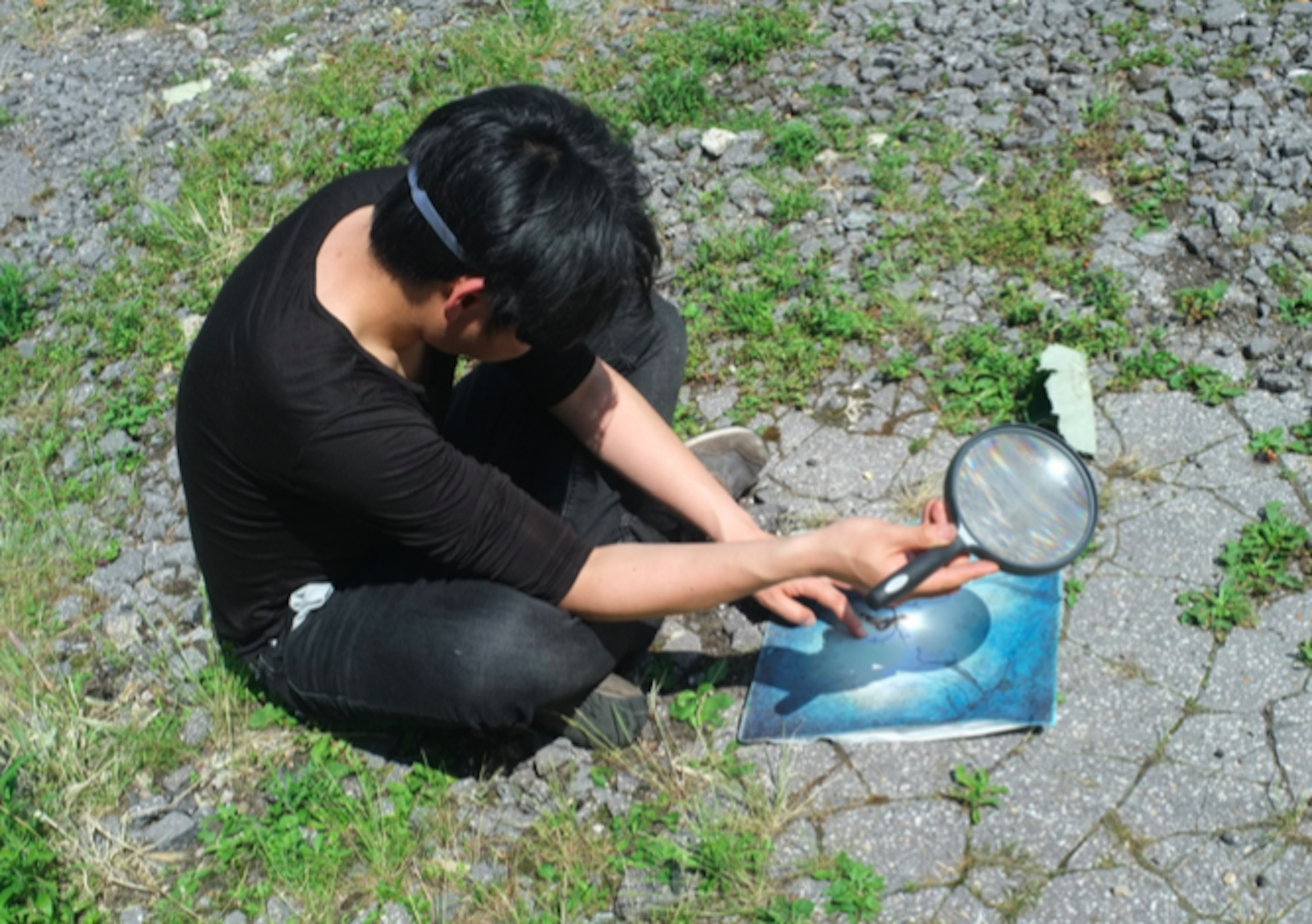
A pic illustrating the concept of multiple beams converging just right to achieve an outsized powerful impact.
Wednesday & Friday, August 12 & 14 - Treatment 4 & 5
Both of these treatments were pretty now routine except that today’s session was my final one. I’m so happy that the treatments are finally over.
But now the initial recovery starts. The staff told me to expect worse side effects for a few weeks before I’ll start feeling better. The literature actually mentions months and not just weeks. The side effects that they mentioned include the possibility of temporary hair loss near the radiation site, scalp sensitivity, worse balance and hearing, and possibly some facial involvement. Argh!
