
Living With A Vestibular Schwannoma (Acoustic Neuroma)
Why i’m writing this
People often only share the positive moments in their lives publicly. And I think that gives an incomplete picture of a person and results in a lot of the negative effects we see from social media.
I’d therefore like to share an authentic account of a medical experience I’m currently living through. I share it too because someone also shared a pic on LinkedIn a couple of years ago that inspired me to reach out to them in a DM to ask if they had the same diagnosis as I do, which it turns out they did. I’ve learned so much from an ongoing series of DMs in which he shared his decisions and experiences.
I’d therefore like to pay it forward to others who may have something similar as well as to share it with those of you with whom I work to let you know about this aspect of my life over the next while and explain any absences to meetings that may be required.
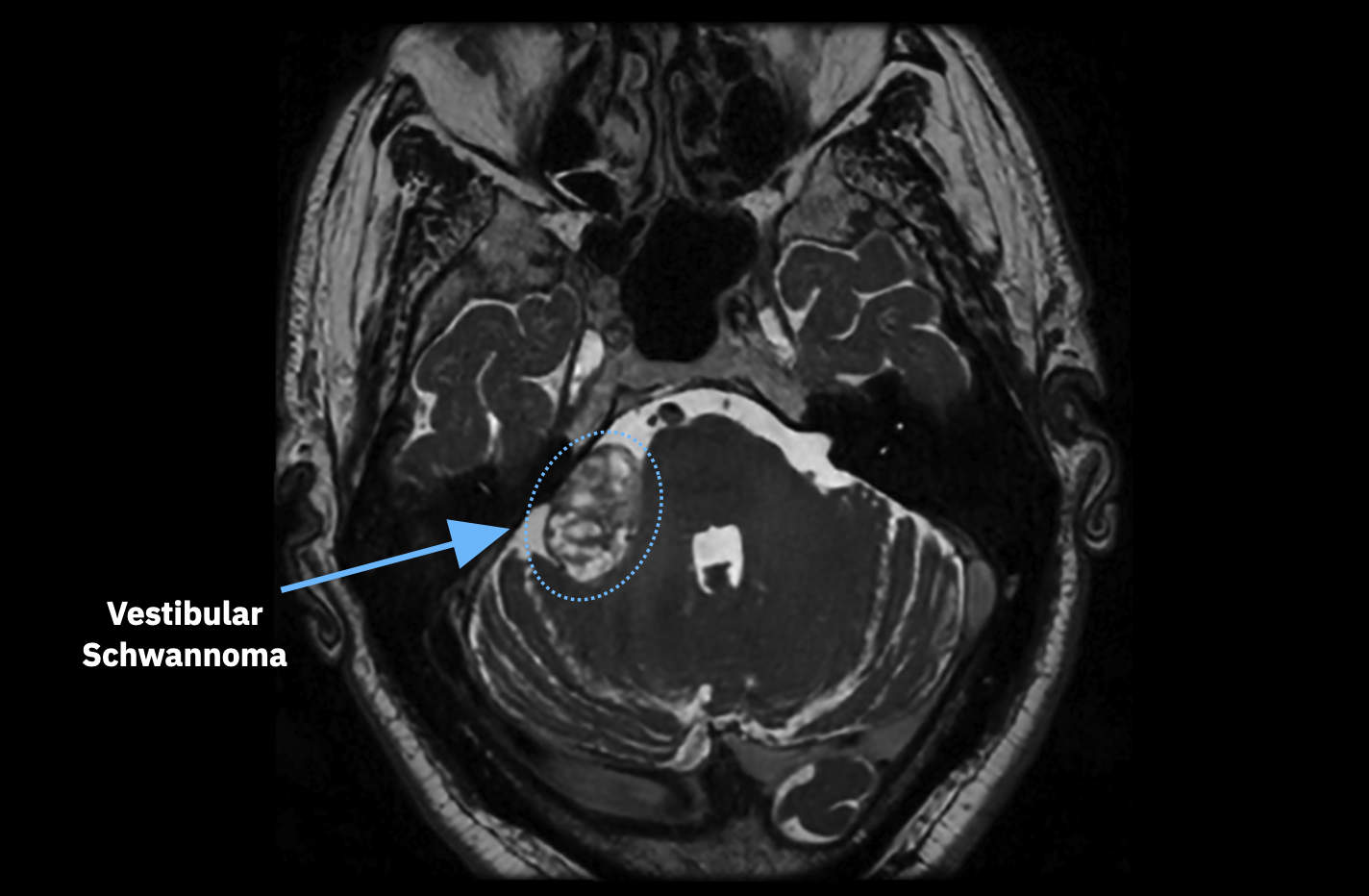
The MRI slice of my skull showing the tumor indicated by the blue dotted line surrounding it.
Learning that something wasn’t right
A few years ago, my right ear felt full which I attributed to the pressure not equalizing after a flight I’d been on. I used to fly a lot so it was quite a reasonable attribution. However, when things didn’t clear up I got a referral to an ENT and he said that I’d need to get an MRI because single-sided hearing loss is often associated with a tumor.
I had the MRI and, yup, I was diagnosed with a benign tumor that has two names Vestibular Schwannoma and Acoustic Neuroma. The current most accurate medical term is Vestibular Schwannoma. Both terms provide some indication of the two most common symptoms—loss of balance and loss of hearing—caused by the tumor pressing on the vestibular and auditory nerve, respectively. There is no known cause, just a random genetic glitch in the vestibular nerve’s Schwann cells.
Now that I reflect on it, I recall being on that super long escalator at London’s Heathrow Airport Terminal 2 some year ago and getting really nervous with some serious vertigo which I’d never experienced before.
I’ve also been somewhat unsteady on my feet particularly when walking at night, when visual cues are reduced and your brain relies more heavily on the vestibular system, which in my case has been compromised. My hearing on my right side has also been getting progressively worse (by about 80%) and I’ve been experiencing tinnitus (buzzing and ringing in the ears).
Wait and see approach
The primary initial treatment advice was no treatment at all, just observing the tumor with yearly MRIs. For many people, wait and see is the only approach they’ll ever have. Up until this year, the tumor was stable at about 24mm at its largest. However, the MRI from earlier this year indicated that the tumor had grown 7mm, and importantly, beyond the 3cm that requires medical intervention.
If I don’t pursue the medical intervention now, the tumor would keep growing, worsening hearing and balance and eventually pressing hard enough on the brainstem and cerebellum to block spinal-fluid flow, affect facial nerves, and ultimately become life-threatening, an outcome nobody wants.
Treatment options
Also, a year ago, I requested a consult with a brain surgeon to discuss what might happen if the tumor were to grow. He mentioned that my type of tumor, which has what are called cystic (fluid-filled) components, would result in my needing to have brain surgery.
This year I went back to him now that the need for actual medical intervention was required and he repeated the same advice but did mention that I should see an expert in radiation treatment, though he cautioned, as he did the previous year, that radiation would likely not be an option. I was then referred to a radiation oncologist, not that my tumor was now cancerous but because that’s the medical specialty that deals with radiation treatment which is mostly used to treat cancers.
The radiation oncologist pointed out that a full single dose of what’s referred to as Gamma Knife Surgery wouldn’t be appropriate for my size and type of tumor but that Hypofractionated Stereotactic Radiation treatment would be. Rather than a single large dose, this approach uses five smaller doses given every other day for two weeks (excepting weekends). He also mentioned that some recent research actually indicates that tumors with cystic components do better than solid tumors using this treatment method.
As I’ve mentioned previously here, I also have an AI digital twin with all my medical information ingested so I’ve also being using it with the highest level Claude model to look for the latest research and to provide me day-to-day advice. It’s been amazing. In fact, my doctors regularly mention that I know more about certain things than they do when I check with them regarding what I’ve found. Of course, I also read the articles in the medical literature myself thoroughly that the AI directs me to. And some recent research does in fact suggest that cystic component tumors like mine respond better and more quickly to the treatment protocol.
Treatment decision
My surgeons and radiation oncologist left the decision of whether to go with surgery or radiation entirely up to me. The factor that convinced me to go with the radiation option was the difference in the two procedures when it comes to protecting the facial cranial nerve. Surgery has a 10-15% likelihood of permanent damage leading to facial palsy whereas the particular radiation protocol prescribed for me has only a 1-2% likelihood of facial nerve damage and even then it is typically not permanent.
When I shared my decision with my lead surgeon to go with radiation he said that he couldn’t agree more with my decision. The literature suggests a success rate of 90—95% to arrest tumor growth. And if the radiation doesn’t work, he mentioned that I’ll always still have surgery as an option. I told him that while I’ve loved working with him, that I truly hope to not see him again (because that would mean the radiation failed).
Some cool technology
The other new development is the treatment machine itself. The hospital and center I’m going to, Sunnybrook Hospital Odette Cancer Centre in Toronto, collaborated with six other centers globally and with the manufacturer, Elekta, to combine in one integrated machine an MRI machine for super precise real-time guidance of the radiation together with a linear accelerator that delivers the radiation, referred to as an MR-LINAC machine.
I’ve been fitted with a custom-made mesh mask to secure my head to the table in the MR-LINAC machine plus I’ve had a CT scan and an MRI to provide the medical and physics team the images to use in the planning of my treatment protocol.
The equipment like this at the Odette center as well as the staff are absolutely awesome so I’m getting the very best of care and I so appreciate that.
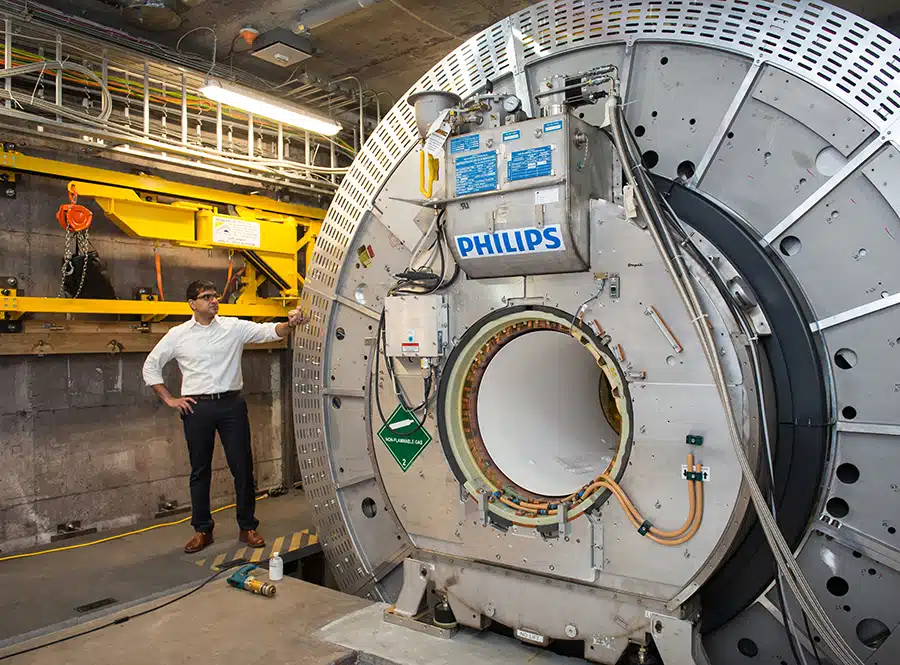
The technical guts of the Elekta MR-LINAC machine
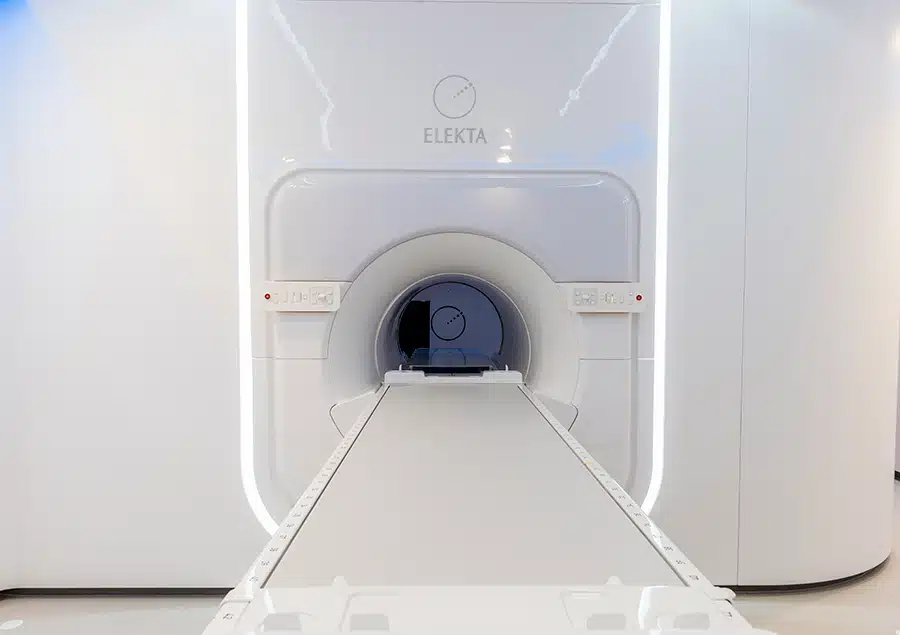
The patient view of the Elekta MR-LINAC Machine.
expected recovery
Based on everything I’ve read in the literature and been told by my medical team, I’ll likely experience fatigue and possibly other minor symptoms that build up over the two weeks of treatments and then symptoms like balance, hearing, and possibly some periodic and temporary facial weakness may increase over the following weeks and months. This is due to the fact that the radiation damages the tumor's cells, and the body's inflammatory response to that damage like swelling and extra fluid temporarily may swell up before it quiets down and contracts.
The success or failure of the procedure at halting and ideally slightly reducing the size of the tumor will only be known a year or even a year and a half after the treatments. Those assessments are done with a 6 month, year, and then yearly MRIs. So, this is a long process and the initially dreaded MRI machine has now become my best friend.
I’ll provide live updates here
Wednesday, July 29, 2026
I start my treatments next week on Tuesday and Thursday and then resume them the following week on Monday, Wednesday, and Friday.
